|
Bath Iron Works Makes Them Big
At first, you might think this Discovery Channel presentation pretty boring, but if scale modeling of ships is your hobby, seeing how the prototype is actually put together a program like this is something you want to share.
The Arliegh Burke class destroyers are the Navy’s most sophisticated weapons package and measure up to Adm. Arleigh Burke’s comment during World War II, "This ship is built to fight; you'd better know how." This class of warship boasts more firepower per ton (about 8,500 tons all together) than any other class of ship in the world, These destroyers start their trip down the Kennebec River on a computer as the design is updated to the latest configuration and the ship is spit up into 100s of pieces. The plans are fed to the working floor where cutting torches get down to the real work of transforming raw steel into the parts that go into one of 70 modules.
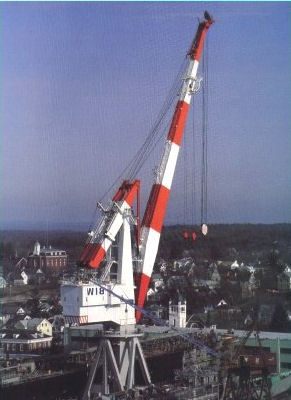
Watching this process that in real life takes up to 9 months) unfold in an hour still causes you to wonder how workers like these over 60 years ago in Bath turned out a comparable vessel once every 17 days. Bath Iron Works is one of just a handful or so of great American shipbuilding firms still capable of building Navy ships, and it is the last of them all to be launching ships down the ways.But the new technology involved in building ships today allows them to contain so much more in the way of firepower and new systems than older methods of construction. The centerpiece of the BIW operation is a floating dry dock, into which the completed ships are rolled. With a fully assembled ship inside, the dry dock can be moved out to the center of the river and flooded, allowing the new ship to emerge from it as if from a steel box.
Let Us Help You Build Your Own Shipyard
|

 Each module is hand assembled (read scratch built) into standalone units that weigh in at 100s of tons each making their way down the shop floor one after the other. They are complete with hull components, decks, wiring and even interior furniture.

Quick-Finder