
|
Military Models
|
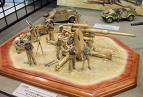
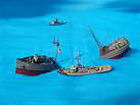
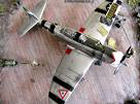
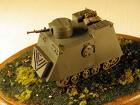
Military models whether they are tanks, ships planes, or figures are a class of models that have come into popularity in the past couple of decades that weren’t around when I was working with plastic models. They have taken on a new dynamic in detail, realism and quality of workmanship.
Dioramas of military scenes (WWI and WWII are the most popular) occupy the time of many modelers and judging from online pictures, these military models are remarkable.
Whether built around a commercial kit, scratch built, or even bashed from multiple kits, they usually place high in local scale model contests.
| Knowledge of history, events and geography also play a
roll in the development of subjects and themes. Complexity ranges from the simple assembly and painting of a model kit out of the box to the complete scratch building of a vehicle, aircraft or ship from materials such wood, plastic, metal or resin. Modelers compete for prizes and recognition among their peers in contests in most countries at various times of the year. The cost and skills involves mean that military models have increasingly become a hobby for grown-ups rather than children, though there are still many kits suitable for completion by youngsters. |
|
This venue has spawned a complete network of subdivisions under the magazine, “Armchair General”.
A Military History Resource
Tactics 101
Museum Visits
Battlefield Visits
Reenactments
Alternate Histories
Movie and Book reviews
More importantly, active servicemen have been writing of their experiences to give modelers an idea of what real battlefield conditions are like. For instance “And then all Hell broke loose” is an example of a story that never made CNN.
Check out Military Models in the Mall

Military vehicle modelers tend to focus on vehicles from three eras. World War I, World War II, and the modern era. The first denotes armored vehicles from their inception into combat during the first World War until approximately 1936. Vehicles of this time period are considered to be experimental for the most part and did not make major contributions to what few battles they took part in.
Vehicles used between 1936 and 1945 fall into the Second World War category. Even though this area spans the shortest number of years, it is by far the most popular for armor modelers due to the enormous range of vehicles used and the vast improvements in armor technology. During the early part of the war, most armored vehicles were smaller, less heavily armored, and lightly armed. Major tank engagements early on convinced governments on all sides of the need for more survivable and deadlier vehicles. Tanks designs created near the end of the war remained largely unchanged until the 1970s.
Any vehicle designed after 1945 is considered "modern". This encompasses a longer time span and very large number of armor designs from all countries, therefore the groupings tend to be associated with country of origin, i.e. modern US, modern British, modern Russian, etc.

SBI!
