
|
RC 30,000-foot Flight Challenge
|
|||||||
 | Get three or four guys together with almost any contestable activity, even R/C flying and you’ll soon hear “mine will fly higher…faster…quieter…louder than yours”. Now there is a group in Great Britain out to cap this tussle by flying an R/C plane to 30,000 feet. The 30,000-foot R/C Challenge is extreme RC flying at its best and there are several issues. |
| Cuba Bay from an Airliner at 35,000 plus |
Brushless EasyStar over the New Forest
In the video above you are watching an EasyStar RC Muliplex flying over a forested area at about 2,400 feet, about a 12th of the height the English RCers are aiming to reach.
These are the rules
1. The plane must fly from sea level (or there abouts)
2. We must use technology that is available within the RC community
3. And the plane should be in manual control throughout...
The challenge comes introducing Radio Controlled aircraft into the 30,000-foot environment:
For a starters, the 30,000-foot height is just over 7 miles up - that's over 9,000 meters! The model will be well out of eyesight and therefore not under recommended control parameters. The higher the model plane goes, the more air density and temperature decrease and at 30,000ft the air density is only about three tenths of what it would be at sea level and the temperature will be around -47C or over -100 Fahrenheit!
So, just a few of the problems are insulation of parts, lower lift in thin air, the complexities of engine and propeller selection, and an optimally designed wing... not to mention controlling the thing and knowing where it is!
| the above represent the environmental challenges of trying to reach 30,000 feet above sea level with an RC model plane. | |
| Now lets look at the plane: Power Supply--30,000' will take a lot of energy Radio Control--RC transmitters don't have the range GPS--Needed for orientation. Needs to be light. Video--Lightweight and high resolution Funding--Getting the plane built by donation Finding and Getting--suitable flight location | 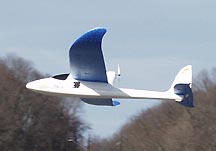 |
Keep Up With The 30,000-Foot Challenge Blog

SBI!
